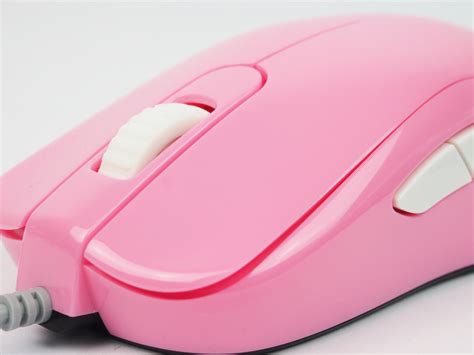
Is the Zowie S1 Still Good in 2026? Long-Term Review
Introduction
In the rapidly evolving world of gaming peripherals, where wireless technology is now reaching polling rates of 8000Hz and weight-shaving has reached the point of obsessive minimalism, the Zowie S1 feels like a relic from a different era. I remember picking this mouse up several months ago, not because I was looking for the latest bleeding-edge sensor or a hole-riddled honeycomb shell, but because I was tired of chasing the "lightest is best" trend. After years of switching between various carbon-fiber-infused wireless mice, I found myself missing a sense of stability and a shape that didn't feel like it was disappearing in my palm. I decided to go back to a classic—the Zowie S-series. Specifically, the S1, the larger sibling in the lineup.
I’ve been using the Zowie S1 as my primary daily driver for over six months now, through competitive Valorant sessions, casual Apex Legends grinds, and thousands of hours of general productivity work. What I found was a mouse that defies modern conventions in almost every way, yet remains one of the most consistent performers on my desk. In this review, I’m going to share my honest findings about why this wired, somewhat heavy, and incredibly simple mouse is still occupying space on my mousepad in 2026, and where it clearly shows its age compared to the modern competition.
The Shape: Why I Keep Coming Back
If there is one thing Zowie is known for, it is shape. In my experience, no other manufacturer quite understands the ergonomics of a "symmetrical-ish" mouse like they do. I have relatively large hands—about 20cm by 10.5cm—and most modern "medium" mice feel just a bit too cramped for a relaxed claw grip. After testing dozens of shapes for several years, the S1 remains the gold standard for my hand size. The S1 is shorter than the FK series but has a higher profile, which fills my palm much more effectively.
What I noticed immediately is the way the back of the mouse is designed. It tapers in a way that allows the base of my palm to rest securely without feeling like my wrist is being forced into an awkward angle. One thing that bothered me about some of the newer ultralight mice is that they often achieve their low weight by shortening the back or narrowing the middle, which leads to hand fatigue during long sessions. I was surprised by how much more control I felt I had over my micro-adjustments just by having that extra bit of surface area to brace against. The front of the mouse is slightly raised, which Zowie claims helps with vertical movement. In practice, I found that it simply gave my fingers more room to breathe, preventing that "cluttered" feeling I get on smaller mice like the Viper or the GPX series.
Build Quality and Coating
In 2026, many mice feel like expensive toys—thin plastic shells that creak if you squeeze them too hard. The Zowie S1 feels like a tank. There is absolutely zero deck flex, no rattle when I shake it, and the side walls feel incredibly dense. I appreciate this "built-to-last" philosophy, even if it comes at the cost of weight. However, one specific disappointment I must mention is the coating. I bought the standard matte black version, and after about three months of heavy use, I noticed that the finish started to get "shiny" in the areas where my fingers rest. If you have sweaty hands like I do, the Zowie coating can become a bit slippery and fingerprint-prone quite quickly. I found myself having to wipe it down with a microfiber cloth every other day to keep that premium feel.
The buttons are another area where the S1 feels distinct. Zowie uses Huano switches, which are famously stiffer than the Omrons or optical switches found in most modern mice. In my experience, this is a double-edged sword. For tactical shooters like Valorant or CS2, I love the tactile, deliberate click. I never have accidental right-clicks when resting my middle finger. However, when I switched over to more click-intensive games or even just scrolling through long documents, I noticed some finger fatigue. These aren't the lightest clicks on the market, and if you prefer a hair-trigger response, you might find these a bit cumbersome.
Find top-rated Electronics products at great prices.
Shop Amazon →The Cable and the "Old School" Experience
Let's address the elephant in the room: the cable. In a world where wireless is the standard, using a wired mouse in 2026 feels like a conscious lifestyle choice. The Zowie S1 uses a paracord-like cable, but it's not the softest or most flexible one I've used. After testing for several weeks, I realized that a mouse bungee is absolutely mandatory for this mouse. Without a bungee, I felt the cable dragging against my mousepad, which created an inconsistent resistance that ruined the glide. Once I set it up in a bungee with enough slack, I mostly forgot about the wire, but "mostly" isn't "completely." There are still moments during wide flick shots where I can feel the tether.
The sensor inside is the 3360. On paper, this is an ancient sensor by 2026 standards. We have sensors now with 30k+ DPI and motion sync. But here is the honest truth: I could not tell the difference in a blind test. At 400 or 800 DPI, the 3360 remains flawless. I experienced no spin-outs, no jittering, and the lift-off distance is perfectly tuned out of the box. Zowie’s implementation of the 3360 is legendary for its reliability. One thing I've always appreciated about Zowie is the plug-and-play nature. There is no software to install, no accounts to create, and no firmware updates to worry about. You change the DPI and polling rate using physical buttons on the bottom. It is a refreshing break from the "Software-as-a-Service" model that has infected almost every other peripheral brand.
Performance in Competitive Play
When it comes to actual performance, the Zowie S1 is a precision instrument. Because it weighs around 87 grams, it offers a level of stopping power that 50-gram mice simply cannot match. I found that my flick-to-still transitions were much cleaner on the S1. On lighter mice, I often "over-flick" and have to make a secondary micro-correction. With the S1, the weight acts as a natural stabilizer. I felt more confident taking long-range duels in Valorant because the mouse felt "locked in" to the pad.
The scroll wheel is the one area where I was genuinely disappointed. Zowie uses a 16-step optical scroll wheel. It is loud, chunky, and the steps are very defined. For jumping in games, it’s great because it’s hard to mess up. For browsing the web or doing anything else, it’s honestly annoying. It sounds like a ratchet and feels prehistoric. I wish Zowie would move to a 24-step wheel, but they seem committed to this specific tactile feel for the "pro gamer" niche. It's a clear reminder that this mouse was designed for a stadium, not an office.
Pros and Cons
- Exceptional Shape: The raised back and tapered sides provide the best palm support for medium-to-large hands currently available in the symmetrical category.
- Unmatched Build Quality: It feels incredibly sturdy with zero shell flex or creaking, offering a sense of durability lacking in ultralight alternatives.
- Plug and Play: The absence of forced software is a massive plus; all settings are saved on-board and adjustable via physical buttons.
- Steady Control: The 87g weight provides excellent stability for tactical shooters where precision and stopping power are more important than raw speed.
- Tactile Clicks: The Huano switches offer a very deliberate and satisfying click sensation that prevents accidental activations.
- Outdated Cable: Being wired in 2026 is a hard sell; the cable requires a bungee and can still be felt during intense movement.
- The Coating: It becomes slick and shiny with hand oils relatively quickly, requiring frequent cleaning to maintain grip.
- Loud Scroll Wheel: The 16-step wheel is tactile but obnoxious for daily productivity and feels very dated.
- Weight: For players who have fully transitioned to the sub-60g "faster is better" meta, the S1 will feel like moving a brick.
Comparison with Modern Alternatives
To give you a better idea of where the S1 sits in the current market, I’ve put together this comparison table based on my testing against the most popular modern standards.
| Feature | Zowie S1 (2026) | Modern Ultralight Wireless | Budget Competitive Mice |
|---|---|---|---|
| Weight | 87g - 90g | 45g - 60g | 65g - 75g |
| Connection | Wired (Paracord) | Wireless (2.4GHz) | Wired or Wireless |
| Sensor | PixArt 3360 | Focus Pro / HERO 2 / 3395 | 3335 / 3370 |
| Switches | Huano (Mechanical) | Optical Gen 3 | Kailh / Omron |
| Software | None (Driverless) | Cloud-Integrated / Heavy | Varies (Usually Lean) |
Buying Guide: Is It Right For You?
Deciding whether to buy a Zowie S1 in 2026 depends entirely on your philosophy regarding gaming gear. If you are a competitive player who prioritizes a "fast" setup, this mouse is likely not for you. The industry has moved toward lower friction and lower mass for a reason—it reduces physical strain and allows for faster reaction times.
Shop the latest Electronics picks on Amazon.
View Offers →However, I would recommend the Zowie S1 to a specific type of user. You should consider this mouse if you have hands larger than 19cm and find most modern mice too narrow. If you find that your aim is "jittery" on 50-gram mice and you want something that slows your hand down and provides more feedback, the S1 is perfect. It’s also for the person who hates software. If you are tired of Razer Synapse or Logitech G Hub constantly updating or failing to recognize your hardware, the "dumb" nature of Zowie hardware is a blessing. It works every time you plug it in, exactly how you left it.
One thing I would suggest is checking the size. The S1 is the larger version; Zowie also makes the S2, which is significantly smaller. In my experience, if you use a full palm grip or a hybrid claw and your hands are under 18cm, the S1 will feel cumbersome. It’s a large mouse, and it demands a certain level of hand real estate to be used effectively.
Conclusion
After several months of use, my conclusion is that the Zowie S1 is a specialized tool that has transitioned from a mainstream recommendation to a niche masterpiece. Is it "outdated"? Technically, yes. You can find better sensors, lower weights, and wireless connectivity for the same price or less. But in my time with it, I realized that "better specs" don't always translate to "better aim."
The Zowie S1 provides a level of comfort and "locked-in" stability that I simply haven't found elsewhere. Its shape remains, in my opinion, one of the top three symmetrical designs ever created. While I am often disappointed by the cable and the dated scroll wheel, the moment I get into a high-stakes match, those complaints fade away. I feel more in control of my crosshair with this mouse than any other. It’s a testament to Zowie’s design philosophy that a mouse from years ago can still hold its own against the giants of 2026. It isn't the most advanced mouse on my desk, but it is certainly the one I trust the most when I need to perform.