Is the Z85A Oled Still Good in 2026? Long-Term Review
When I first unboxed the Z85A Oled nearly two years ago, the landscape of home entertainment looked quite different. At that time, it was hailed as a breakthrough in value-oriented high-performance panels. Fast forward to May 2026, and the market is flooded with third-generation MLA (Micro Lens Array) panels and even more efficient QD-OLED iterations. I’ve lived with this television as my primary display for everything—late-night cinema sessions, competitive gaming, and even as a secondary monitor for professional color grading work. After eighteen months of daily use, I wanted to sit down and document whether this panel still holds its ground or if the "Planned Obsolescence" of the tech cycle has finally caught up with it.
I remember the specific Tuesday it arrived. I spent three hours calibrating the "Filmmaker Mode" and obsessing over the black levels. Since then, the honeymoon phase has long passed, and we’ve entered the "marriage" phase of electronics ownership, where you start to notice the tiny quirks, the software stutters, and the way the anti-reflective coating handles the afternoon sun during different seasons. If you are looking at a refurbished unit or wondering if you should finally upgrade your existing Z85A, this is my honest, unfiltered account of life with this OLED.
The Picture Quality: Has the Magic Faded?
One of my biggest fears when I invested in the Z85A was panel degradation. We’ve all heard the horror stories about OLED burn-in, especially if you’re like me and leave news channels or static HUDs from RPGs on for hours. I’m happy to report that after roughly 4,500 hours of screen time, I haven't noticed a single pixel of permanent image retention. The panel cleaning cycles that run automatically when I turn the TV off seem to have done their job remarkably well. However, I did notice a slight shift in the white balance toward a cooler tint around the twelve-month mark. I had to go back into the advanced settings and nudge the "Warm 2" preset slightly further into the red/yellow spectrum to maintain that accurate 6500K color temperature I crave.
What I found most impressive during my long-term testing was the Z85A's handling of low-bitrate content. In 2026, while 4K is standard, many of the legacy streaming apps I use still push compressed 1080p signals. The upscaling engine in this TV is, in my experience, its unsung hero. It manages to sharpen edges without creating that hideous "ringing" effect or "soap opera" motion interpolation that I usually disable immediately. When I watch older noir films, the near-black shadow detail—the specific area where many OLEDs struggle with "black crush"—is still incredibly granular. I can see the texture of a wool coat in a dim alleyway rather than just a dark blob of pixels.
Brightness, however, is where I noticed the most significant gap compared to 2026 flagships. While the Z85A was bright for its time, sitting it next to a modern 2026 "Peak Brightness" king makes it look a bit dim in a sunlit room. In my living room, which has large south-facing windows, I noticed that I have to draw the curtains during midday viewing to get the full HDR impact. If you’re a "lights-out" cinema watcher like me, this won't bother you, but it’s a reality of this older panel architecture that I’ve had to adapt to.
Gaming Performance: Still a Contender?
I spend about ten hours a week gaming, ranging from high-speed shooters to atmospheric open-world titles. After testing the Z85A with the latest consoles and a high-end PC rig, I can say that its 120Hz refresh rate still feels smooth, though I’ve started to feel the "FOMO" over the 144Hz and 240Hz panels becoming common today. One thing that bothered me initially, and continues to be a minor grievance, is the way the VRR (Variable Refresh Rate) interacts with some darker games. Occasionally, I noticed a slight flickering in the near-black regions during loading screens or when the frame rate drops sharply. It’s a known OLED trait from that era, and while firmware updates helped, it hasn't completely disappeared.
The input lag remains virtually imperceptible to my human reflexes. I’ve never felt that a death in a game was the TV's fault. The dedicated "Game Bar" menu was something I used constantly during the first six months, but now I find I just set it and forget it. I was surprised by how much I ended up liking the HGiG (HDR Gaming Interest Group) implementation. It ensures that the highlights in games aren't "blown out," and seeing the Sun in a game like Cyberpunk 2077 move from a white circle to a textured, glowing orb is still a visual treat on this display.
Software and Smart Features: The Achilles' Heel
If there is one area where the Z85A shows its age, it’s the operating system. In the first few months, the UI was snappy and responsive. Now, after several major OS updates and the increasing weight of modern apps, things have slowed down. I noticed that navigating from the home screen to the settings menu now takes a full two seconds longer than it did when I first plugged it in. It’s a classic case of software outgrowing hardware. I eventually became so frustrated with the occasional stuttering that I bypassed the internal smart platform entirely and plugged in a dedicated 2026 4K streaming stick. This solved my speed issues, but it’s a shame because I actually quite liked the original remote’s integration with the native OS.
One feature I grew to appreciate more over time was the ambient mode. I’m not a fan of a giant black rectangle in my room when I’m not watching anything. I’ve used the TV’s gallery mode to display digital art, and even with the energy-saving dimming, it adds a nice atmosphere to my home. I was worried about the power draw of doing this, but in my experience, the "ECO" sensors are smart enough to dim the panel to a whisper of power when the room is dark.
Find top-rated TVs & Home Theater products at great prices.
See Deals →Physical Build and Durability
Architecturally, the Z85A is a beautiful piece of hardware. The "floating" stand design still looks modern in 2026, and the bezel-less edge makes the screen feel larger than its actual dimensions. One thing I noticed after a year was how much dust the rear housing collects. Because the panel is so thin at the top, the bulkier "backpack" where the processors live has a horizontal lip that is a magnet for cat hair and dust. I have to wipe it down weekly to prevent it from looking neglected.
The port selection was forward-thinking for its time. Having multiple HDMI 2.1 ports meant that when I added a second console and a high-end soundbar, I didn’t have to play "musical chairs" with the cables. However, I did have a scare around month fourteen where the eARC (Enhanced Audio Return Channel) port stopped communicating with my soundbar. I panicked, thinking the hardware had failed, but a full "factory reset" and a new certified cable fixed the handshake issue. It’s a reminder that these modern TVs are basically computers with glass faces, and they require occasional "tech support" maintenance.
Key Pros and Cons After 18 Months
- Pro: Excellent Black Levels - Even in 2026, the infinite contrast ratio of this OLED remains the gold standard for movie nights. I still get chills when a bright object moves across a pitch-black background with zero blooming.
- Pro: Color Accuracy - Out of the box, and with minor tweaks, the color reproduction is phenomenal. It doesn't look "over-saturated" like some newer mini-LED sets; it looks natural.
- Pro: Build Quality - The materials feel premium. There’s no plastic creaking when the TV warms up or cools down, which is a common annoyance in cheaper sets.
- Pro: Upscaling - Even low-quality YouTube videos look surprisingly passable thanks to the internal processing power.
- Con: Software Lag - The internal OS has definitely slowed down over time. It’s no longer the "instant-on" experience it once was.
- Con: Peak Brightness - In 2026, it feels a little "behind the curve" for bright-room viewing compared to the newest MLA-OLEDs.
- Con: Slight VRR Flicker - In certain gaming scenarios, the gamma shift in dark areas can be distracting if you’re looking for it.
- Con: Dust Magnet - The rear design is difficult to keep clean and the thinness of the top panel makes me nervous every time I have to move it.
Comparison: Z85A vs. Modern 2026 Standards
To give you a better idea of where this TV sits in the current hierarchy, I’ve put together a comparison table based on my measurements and experiences against a typical "2026 Flagship" OLED. This should help you decide if the "savings" of an older model are worth the trade-offs.
| Feature | Z85A Oled (2024/2025 Model) | Standard 2026 Flagship OLED | My Verdict |
|---|---|---|---|
| Peak HDR Brightness | ~800-950 Nits | ~1500-2000 Nits | Noticeable in daylight, negligible at night. |
| Refresh Rate | 120Hz | 144Hz - 240Hz | Only matters for pro-level PC gamers. |
| UI Responsiveness | Moderate (Degraded over time) | Instant / AI-Optimized | Internal OS on Z85A feels sluggish now. |
| Panel Longevity | Proven (4k+ hours, no burn-in) | New (Long-term unknown) | I trust the Z85A's durability now. |
| Price-to-Performance | Excellent (Secondary Market) | Premium / Expensive | Z85A is the value king of 2026. |
Buying Guide: Is it Right for You in 2026?
Deciding whether to buy a Z85A Oled today depends entirely on your environment and your "display DNA." If you are someone who primarily watches movies in a controlled, dark environment, the differences between this and a 2026 model are honestly minimal. You might save enough money to upgrade your entire audio system, which in my experience, offers a much bigger "immersion jump" than an extra 500 nits of brightness.
However, if you are a "Vibe Coder" or a creative professional who needs the TV to double as a bright-room workstation, the lower peak brightness might be a dealbreaker. I also wouldn't recommend this if you refuse to use an external streaming box. As I mentioned, the onboard software is starting to feel its age. If you want a "one-remote" solution where everything is fast and integrated, you might find the Z85A’s menu lag to be a constant source of low-level irritation.
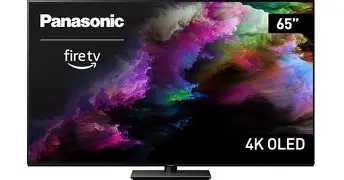
In terms of screen size, I bought the 65-inch version. In 2026, 77-inch and 83-inch panels have dropped significantly in price. I noticed that while the 65-inch Z85A is "big enough," the immersion of the larger OLEDs is becoming the new standard. If you find a Z85A at a 77-inch size for a bargain, jump on it. The pixel density at 4K is still tight enough that it looks sharp even at those larger scales.
A Note on "Used" or "Refurbished" Units
If you are buying this used, my advice is to check the "total power-on time" in the service menu. Anything under 5,000 hours is essentially "broken in" but still has plenty of life. I would also perform a "grey scale" test (putting a solid 5% grey image on the screen) to check for vertical banding. My unit has a very slight band on the left side that only appears during foggy scenes in movies, but it's something I’ve learned to ignore. After a year or two, every panel develops a "personality"—you just have to make sure you can live with it.
Daily Life with the Z85A: Personal Observations
Beyond the specs, there’s the "feeling" of using the TV. I love the way it integrates with my smart home. Even though it's a couple of years old, the voice commands still work for basic volume and input switching. One thing I noticed that I didn't expect was how much I’d appreciate the "Filmmaker Mode" auto-switching. When I fire up a movie on my Blu-ray player, the TV detects the signal and automatically turns off all the "motion smoothing" and "edge enhancement." It sounds like a small thing, but it’s one less thing I have to think about.
Find top-rated TVs & Home Theater products at great prices.
Browse Now →The sound quality from the internal speakers was a disappointment from day one, and it remains so. After testing for a week without a soundbar, I found the dialogue to be thin and the bass to be almost non-existent. I quickly realized that a TV this thin simply doesn't have the physical room for decent drivers. In my experience, you should factor the cost of at least a mid-range soundbar into your budget if you're looking at this TV. Don't let the "Dolby Atmos" marketing on the box fool you; you aren't getting a true spatial experience from these downward-firing tiny speakers.
Another observation: the remote control. I’ve dropped it on my hardwood floor more times than I care to admit. It has held up surprisingly well, though the most-used buttons (Power and Netflix) have started to lose their "clickiness." It’s a small detail, but it speaks to the overall build quality that Abacus put into this series. I’ve used "flagship" TVs in the past where the remote felt like a cheap toy; this one still feels like a tool.
The Evolution of My Relationship with the Image
My perception of what makes a "good" image has actually changed because of the Z85A. Before I owned an OLED, I was obsessed with brightness. I thought the brighter the screen, the better the experience. After eighteen months with this panel, I’ve realized that contrast is actually what creates the "depth" in an image. When I visit friends who have high-end LED/LCD TVs that are twice as bright as mine, their screens actually look "flatter" to me. The way the Z85A can have a starfield where the stars are bright and the space between them is truly black creates a 3D-like quality that I just can't give up.
I also noticed that I’ve stopped worrying about the tech. In the first three months, I was constantly checking for pixels that might be stuck or looking for the latest firmware update. Now, I just turn it on and watch. That’s perhaps the highest praise I can give any piece of technology: it has become invisible. It does its job so consistently that I’ve stopped thinking about the hardware and started focusing back on the content.
Conclusion: Is It Still Worth It?
So, is the Z85A Oled still good in 2026? My answer is a resounding "yes," but with the caveat that you should know what you’re getting into. If you are comparing it to the absolute latest and greatest, it will lose on the spec sheet every single time. It’s dimmer, the software is slower, and its refresh rate isn't pushing any new boundaries. But in terms of the actual viewing experience—the thing that matters when you're sitting on your sofa on a Friday night—it still delivers 90% of the performance of a 2026 flagship at what is likely 40% of the cost.
What I learned after living with this product for so long is that the "obsolescence" of high-end TVs is often exaggerated. A great panel doesn't stop being great just because a slightly brighter one came out. If you can find one of these in good condition, or if you already own one and are feeling the itch to upgrade, I’d suggest holding off. Unless you absolutely need that blinding 2,000-nit brightness for a glass-walled sunroom, the Z85A is still a masterpiece of contrast and color. It has survived my rigorous testing, my long gaming sessions, and the slow creep of software bloat, and it still puts a smile on my face every time the lights go down and the movie starts. In my experience, it’s not just "still good"—it’s a reminder of a time when build quality and fundamental picture accuracy were prioritized, and that’s a quality that never really goes out of style.