Biggest Stanley Perfect Brew Pour Over Buying Mistakes (And How to Avoid Them)
Introduction
In the crowded world of single-serve coffee accessories, the Stanley Perfect Brew Pour Over has become a notable choice for people who want the ritual of pour-over coffee with the convenience of a travel-ready vessel. Placed in the Electronics category for retail organization and searchability, the product bridges the gap between portable beverage gear and countertop brewing tools. Buyers are often drawn to the idea of brewing a fresh cup anywhere — at a campsite, in a commuter seat, or at the office. Yet a number of common mistakes can leave purchasers dissatisfied, not because the product fails, but because expectations, accessories, and brewing technique are mismatched.
This article explores the most frequent buying mistakes people make when considering the Stanley Perfect Brew Pour Over, explains why those mistakes matter in real-world use, offers a candid analysis of the product’s strengths and weaknesses, and provides a practical buying guide so readers choose and use it with confidence.
What the Stanley Perfect Brew Pour Over Is (and Is Not)
The Stanley Perfect Brew Pour Over is a hybrid product: it combines an insulated drinking vessel with a pour-over brewing interface. Its goal is to let users brew directly into a well-insulated cup without hauling separate drippers and carafes. That design solves real problems — fewer parts, lower spill risk, and less thermal loss between brewer and mug — but it also imposes compromises compared with a full-size pour-over setup.
Buyers should understand two key points before purchase. First, portability and thermal performance are prioritized over the full control and capacity of a dedicated pour-over station. Second, brewing technique and accessory choices (grind size, filter type, kettle temperature) remain critical: the Perfect Brew can make excellent coffee, but only when matched with appropriate technique.
Detailed Product Review and Analysis
Design and Build Quality
The Stanley Perfect Brew typically follows Stanley’s established design language: durable stainless steel construction, a vacuum-insulated body, and a lid system that integrates the pour-over interface. For buyers who need a rugged, spill-resistant item for travel or outdoor use, the product shines. The materials resist dents and odors, and the double-wall insulation helps keep brewed coffee hot for longer than a non-insulated paper-cup pour-over.
Real-world use case: a commuter who leaves home at 7:00 a.m. and wants a hot cup at 9:00 a.m. will appreciate the thermal retention. Campers value the robustness — it tolerates being tossed into a backpack without significant risk of damage.
Brewing Performance
Performance depends heavily on three variables: filter choice, grind size, and pouring technique. The integrated pour-over cone is convenient but smaller and shallower than many countertop drippers. That means extraction dynamics differ: water flow can be faster, and bloom time needs attention. Users will see different results if they use a paper filter versus a reusable metal mesh; paper filters remove more oils and microfine particles, producing a cleaner cup, while metal filters deliver fuller body and more fines in the mug.
Real-world use case: an office worker who uses a coarse grind and a quick pour will likely under-extract and get thin coffee. Conversely, a traveler who uses a fine grind with a metal filter may over-extract and get a muddy mouthfeel unless the pour is adjusted.
Heat Retention and Practicality
Stanley’s vacuum insulation is a strong point. The product is designed to keep coffee hot for hours. However, heat retention is affected by preheating (or not), how quickly the user brews, and whether the lid remains closed after brewing. Neglecting basic thermal habits — like rinsing and warming the vessel — can lead to cooler-than-expected coffee.
Real-world use case: during a long commute with multiple stops, keeping the lid closed and preheating the vessel translates into a noticeably hotter beverage at arrival.
Cleaning and Maintenance
Integrated systems are convenient until residue builds up. The pour-over area, seal gaskets, and filter components all need regular cleaning. Reusable metal filters require brushing and occasional deep cleaning to avoid oil buildup, which affects taste. Buyers who want low-maintenance gear should check how easily parts disassemble and whether components are dishwasher-safe.
Real-world use case: a parent who brews twice daily for several days will prefer a model where the lid and filter come apart easily and rinse clean in under a minute — otherwise cleaning fatigue leads to rancid tastes over time.
Compatibility and Accessories
Compatibility matters: some users prefer to use standard paper cone filters for convenience, while others favor a permanent mesh filter. The product’s usefulness increases when it accepts commonly available filters, reducing the need for proprietary supplies. It’s important to verify which filter sizes or forms fit the cone and whether replacement parts are available.
Shop the latest Electronics picks on Amazon.
Browse Now →Real-world use case: a weekend traveler who runs out of filters on a trip will appreciate compatibility with paper filters found in rural stores; otherwise the option to use a metal filter is a lifesaver.
Common Buying Mistakes and How to Avoid Them
Mistake 1: Expecting the Same Flavor as a Full-Size Pour-Over Setup
Why it happens: marketing images and descriptions emphasize “pour-over” and imply barista-level control. In reality, the smaller cone and insulated environment change flow rate and extraction.
How to avoid: temper expectations and adapt technique. Use a slightly finer grind than for typical manual pour-over, slow the pour during bloom, and adjust dose by 5–10% to taste. If a cleaner cup is desired, use a paper filter and a controlled gooseneck kettle when possible.
Mistake 2: Buying Without Checking Filter Compatibility
Why it happens: buyers assume the brewer uses standard filters or that reusable filters are included.
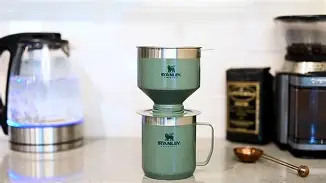
How to avoid: confirm whether the product comes with a reusable filter and whether it accepts standard paper filters (#2, cone sizes, etc.). Plan for replacements and test both filter types to determine preferred taste and maintenance level.
Mistake 3: Ignoring the Importance of Grind Size
Why it happens: people buy a travel brewer then use coffee pre-ground for drip machines or espresso, creating extraction mismatch.
How to avoid: grind for pour-over specifically. If portability is required, add a compact burr grinder to the checklist; a blade grinder or pre-ground supermarket coffee rarely delivers consistent results.
Mistake 4: Underestimating Cleaning Needs
Why it happens: the integrated brewer seems low-maintenance but oils and fines accumulate quickly.
How to avoid: rinse parts immediately after use, brush the reusable filter daily, and perform a weekly deep clean with a mild detergent or baking-soda soak. If ease of cleaning is a priority, verify that parts are removable and dishwasher-safe before buying.
Mistake 5: Overlooking Capacity and Use Patterns
Why it happens: buyers assume one size fits all. A single-serve mug may be too small for someone who shares or wants multiple cups.
How to avoid: match vessel size to typical consumption. If more than one cup is required, consider brewing into a separate thermal carafe or choosing a larger-capacity brewer.
Mistake 6: Forgetting Preheating and Pouring Technique
Why it happens: rushing in the morning leads to skipping preheat or using boiling water straight away, which affects extraction and temperature retention.
Looking for the best Electronics deals on Amazon?
Browse Now →How to avoid: preheat the vessel with hot water for 30–60 seconds, use water around 92–96°C (197–205°F) for optimal extraction, and pour in controlled spirals paying special attention to a 30–45 second bloom phase when using fresh coffee.
Pros & Cons
Pros
- Portability: Compact, integrated design reduces the number of parts to carry for travel and commuting.
- Durability: Stainless steel construction stands up to camping, commuting, and daily knocks.
- Thermal retention: Vacuum insulation preserves heat far better than non-insulated drippers.
- Single-serve convenience: Brew directly into the vessel, reducing transfer mess and heat loss.
- Versatility: Works with metal or paper filters (when compatible), giving users a choice between body and clarity.
Cons
- Compromised brew control: Smaller cone and shorter water travel change extraction dynamics compared with full-size drippers.
- Cleaning burden: Integrated parts and reusable filters require regular cleaning to avoid off-flavors.
- Capacity limits: Designed for single servings; not ideal for sharing or multiple cups without multiple brews.
- Accessory dependency: Best results often require a gooseneck kettle and a burr grinder, which adds cost and bulk.
- Expectation gap: Without technique adjustments, some buyers expect barista-level results and feel disappointed.
Comparison Table: Stanley Perfect Brew Pour Over vs. Common Alternatives
| Feature | Stanley Perfect Brew Pour Over | Traditional Dripper + Mug | Travel French Press |
|---|---|---|---|
| Portability | High — integrated, rugged, travel-focused | Medium — dripper and mug separate; more parts to carry | High — compact, but heavier when filled with grounds |
| Thermal retention | Very good — vacuum insulated | Poor — heat lost during transfer unless insulated mug used | Good — some models insulated, but mesh press allows heat loss |
| Brew control | Moderate — cone size limits flow control | High — full-size cones permit precise pours and capacity | Low — immersion method, different flavor profile |
| Cleaning | Moderate — reusable filters need attention; parts may trap residue | Easy — simple dripper, easy to rinse | Moderate — mesh screens need cleaning; coffee oils remain |
| Filter options | Paper or metal (model-dependent) | Paper or metal | Built-in metal mesh |
| Best for | Commuters, campers, office users wanting hot single-serve pour-over | Home brewers who prioritize control and capacity | Users who prefer full-bodied immersion coffee on the go |
Buying Guide: How to Choose and Use the Perfect Brew with Confidence
1. Match the Product to Typical Use
Consider daily routine. If the primary need is a single, hot cup on a commute or trail, the Stanley product is appropriate. If brewing for multiple people or experimenting with dialed-in recipes, a home dripper and kettle will serve better.
2. Decide on Filter Strategy
Choose a reusable metal filter for durability and a fuller-bodied cup. Choose paper filters for a cleaner profile and easier cleanup. Verify compatibility before purchase: some integrated cones support standard cone filters, others require proprietary sizes.
3. Don’t Skip the Grinder
Pre-ground coffee is a major variable in poor results. A small burr grinder greatly improves consistency and yields better extraction. For true portability, consider a compact manual burr grinder that fits a backpack.
4. Prepare the Right Kettle
A gooseneck kettle is not mandatory but provides precision when pouring into a small cone. For outdoor use, a lightweight stovetop kettle works; for office use, an electric kettle with adjustable temperature is ideal.
5. Learn the Basic Recipe and Adjust
Start with a baseline: 15–17 grams of coffee per 250 ml (adjust to taste), water at ~92–96°C, and a 30–45 second bloom with ~30–40 g of water. Continue pouring in slow spirals until reaching the brew weight. Make small adjustments — grind and pour speed — until the cup matches desired balance.
6. Inspect for Replaceable Parts and Warranty
Check that gaskets, lids, and filters are replaceable and that the manufacturer offers customer support. A product that seals well today can develop leaks; having replacement parts extends the product lifetime.
7. Evaluate Cleaning and Storage
Confirm which parts are dishwasher-safe and whether the filter requires special cleaning. If portability includes long trips, plan for a compact brush and minimal detergent to keep oils from building up.
Final Considerations Before Buying
Budget-minded buyers will find strong value in a single product that combines brewing and insulation. However, value is realized only when technique and expectations align with the product’s strengths. The Stanley Perfect Brew Pour Over is best understood as a compromise that prioritizes portability and thermal retention over absolute barista-level control. Many buyers benefit from pairing it with simple upgrades — a small burr grinder and an accurate kettle — to unlock consistently good results.
Conclusion
Most dissatisfaction with the Stanley Perfect Brew Pour Over comes from mismatched expectations, overlooked accessories, or avoidable technique mistakes rather than a fundamental flaw in the product itself. By checking filter compatibility, selecting an appropriate grind, practicing controlled pouring, and committing to straightforward cleaning, buyers can enjoy high-quality, fresh pour-over coffee on the go. For commuters, campers, and anyone who values hot, single-serve convenience without hauling a full brew setup, the product can be a strong, practical choice — as long as one buys it with the right expectations and a modest set of accessories.