A Professional's Take on the New Alliwava Gh8 Mini Pc
Introduction
The Alliwava Gh8 Mini PC arrives at a time when compact desktops are no longer curiosities but practical tools for professionals, creators, and advanced home users. This review examines the Gh8 from the perspective of buyers who prioritize reliability, expandability, and real-world performance rather than marketing blurbs. Rather than focus on a single benchmark, the analysis emphasizes the aspects that typically matter most in everyday use: chassis and build quality, configuration flexibility, thermal behavior, I/O and connectivity, storage and memory options, and the device’s fit for common workflows like remote work, home theater, light content creation, and small-server duties.
What the Gh8 Aims to Be
Alliwava’s Gh8 positions itself as a versatile mini PC that bridges the gap between underpowered stick PCs and larger desktop towers. It targets users who need a small footprint without completely sacrificing performance or upgradeability. For buyers, the most relevant question is whether the Gh8 delivers a balanced package: adequate compute for productivity and multimedia, sensible thermals, useful ports, and straightforward upgrade paths for RAM and storage.
Design and Build Quality
The Gh8 follows the compact rectangular mini-PC form factor that’s popular among modern small-desktop designs. Important considerations in this category include the materials used in the chassis, the presence (or absence) of a VESA mount, ease of access to internal slots, and how the device physically integrates into a workspace.
Professionals will look for a solid-feeling enclosure that can be mounted behind a monitor or stowed on a shelf without blocking vents. The Gh8’s footprint—suitable for a desk or media cabinet—makes it convenient for multi-device deployments like small-office endpoints or digital signage. Removable covers and clearly labeled connectors simplify installation and maintenance, which is an advantage for IT teams managing several units.
Performance and Real-World Usability
The Gh8’s real-world worth depends heavily on configuration. Mini PCs are typically offered with a range of CPUs, memory sizes, and storage options; the right choice depends on tasks:
- Everyday productivity: web browsing, document editing, video conferencing—these workloads are comfortably handled by a modern mid-range mobile CPU and 8–16GB of RAM.
- Content consumption and light editing: 16GB+ of RAM and a fast NVMe SSD reduce bottlenecks when editing photos, streaming 4K media, or running a few background services.
- Developer and virtualization tasks: running containers or virtual machines benefits from higher-core-count CPUs and 32GB+ of memory. For these use cases, the Gh8 should be configured with ample RAM and a thermally capable CPU option if available.
Rather than chasing synthetic benchmarks, professionals should consider sustained performance: how long the CPU can hold boost clocks under load before thermal throttling occurs, and whether the cooling solution introduces fan noise that becomes intrusive during long work sessions. In this context, the Gh8’s cooling design and power profile are as important as peak CPU model numbers.
Thermals and Noise
Thermal management is a make-or-break item for small enclosures. Mini PCs have limited internal space, which constrains heat dissipation. For buyers who plan to run sustained workloads—video encoding, long compile jobs, or local server tasks—verify the Gh8’s thermal headroom. Key practical checks include:
- Does the unit throttle under steady CPU/GPU load, and how quickly?
- What are typical fan noise levels during idle, light, and heavy loads?
- Are vents and intake paths unobstructed in typical mounting positions (e.g., behind a monitor)?
Professionals recommending deployment across teams will prioritize stable thermals and low acoustic signatures. For home theater or bedroom use, a whisper-quiet operation at idle and during media playback is highly desirable.
Connectivity and Ports
One of the practical strengths of a small desktop is its I/O. The Gh8’s utility increases with a generous and well-balanced selection of ports. Typical desirable features include:
- Multiple display outputs (HDMI and/or DisplayPort) to support dual or triple-monitor setups in productivity environments.
- At least one high-speed USB-C/Thunderbolt-capable port for fast external drives or docks.
- A mix of USB-A ports for legacy peripherals and USB-C for future proofing.
- Wired networking—Gigabit Ethernet or preferably 2.5GbE—for stable, low-latency network tasks and large file transfers.
- Audio jacks with optical output support when used as a media center.
Buyers who rely on docking solutions or multiple external monitors should confirm that the Gh8’s port layout matches their peripherals. For shared workspaces, a front-facing USB port for fast device swaps is a usability win.
Storage and Memory
Expandability here is essential. A convincing mini PC provides at least one M.2 NVMe slot for primary storage and room for an additional drive or a 2.5-inch SATA bay for bulk storage. Professionals will typically prioritize:
Find top-rated Laptops & Computers products at great prices.
Shop Amazon →- NVMe SSD for OS and active projects—fast read/write reduces application launch and file load times.
- A second storage option for user data or caching (either another M.2 slot or a 2.5-inch drive bay).
- Upgradeable RAM slots instead of soldered memory; this matters when future-proofing a purchase for multi-year use.
When evaluating the Gh8 for roles such as video editing workstation or light local server, it’s prudent to choose a configuration with a high-performance NVMe drive and the ability to expand RAM later.
Graphics and Multimedia
Integrated graphics in modern mobile-class CPUs have become capable for everyday multimedia and light creative work. The Gh8 is well suited to:
- 4K media playback and streaming, where codec support (hardware-accelerated H.264/H.265/AV1, if present) reduces CPU load and saves power.
- Light photo and video editing workflows that do not rely on discrete GPUs.
- Multiple-monitor output for productivity setups.
Buyers needing heavy GPU compute—3D rendering or high-frame-rate gaming—should weigh whether an external GPU option (via Thunderbolt) exists, or whether a larger desktop with a discrete GPU would be more appropriate.
Software, OS Support and Security
Compatible, stable software support is often overlooked in favor of raw hardware specs. For professionals, the Gh8 should support mainstream operating systems (Windows and popular Linux distributions) without excessive driver fuss. Key considerations include:
- Availability of vendor drivers and BIOS/firmware updates.
- Compatibility with Linux if the device will be used for development or server roles.
- Secure boot and firmware update mechanisms to protect endpoints in managed environments.
Organizations deploying multiple units will value a clear update path and documented driver packages that simplify system imaging and deployment.
Real-World Use Cases
The Gh8 is best evaluated in terms of how it performs in common, practical scenarios:
- Remote Workstation: For many professionals, consistent video call quality, dual-monitor support, and snappy productivity apps matter most. The Gh8’s small size enables a tidy desk while delivering a capable experience when configured with adequate RAM and an SSD.
- Home Theater PC (HTPC): A quiet Gh8 with good HDMI/DisplayPort outputs and hardware video decoding can serve as a discreet 4K media player for a living room setup.
- Edge Server / Small Office Appliance: With Ethernet and storage options, the device can host light services—DNS, VPN, lightweight file shares, or containerized applications—if configured for continuous operation and adequate cooling.
- Point-of-Sale / Digital Signage: Compactness and multiple display outputs make the Gh8 suitable for kiosks or signage solutions where reliability and low power draw are priorities.
- Light Creative Work: Photo editing, podcast editing, and basic video editing workflows are feasible with a higher RAM and NVMe configuration, though heavy rendering still favors discrete-GPU systems.
Pros & Cons
- Pros:
- Small footprint suitable for tight workspaces and mounting behind displays.
- Flexible configuration options that accommodate a range of user needs.
- Typically lower power consumption than tower desktops, reducing operating costs.
- Good fit for media consumption, basic content creation, and light server tasks.
- Potentially easy to service and upgrade compared with ultra-compact soldered designs.
- Cons:
- Limited thermal headroom can cause throttling under sustained heavy loads.
- Lacks the raw GPU power required for demanding 3D work and high-end gaming.
- Port and expansion options vary across SKUs—some buyers may need to verify exact I/O before purchase.
- Small chassis may limit the number and size of internal drives.
How the Gh8 Compares (At-a-Glance)
| Category | Alliwava Gh8 (Mini PC) | Typical Compact Desktop (NUC-style) | Entry-level Mini PC |
|---|---|---|---|
| Form Factor | Very small, VESA-mountable; designed for desk/HTPC use | Compact, sometimes thicker for better cooling | Very small; often fanless or with limited cooling |
| Performance | Balanced—suitable for productivity and media | Broader SKU range, including higher-performance SKUs | Optimized for basic tasks; not for heavy loads |
| Upgradeability | Moderate—user-accessible RAM and storage in most models | Often more flexible—supports more RAM and storage bays | Limited—often soldered RAM/storage |
| Thermals & Noise | Balanced; may ramp fans under load | Better thermal headroom in larger compact systems | Quieter but can throttle under load |
| Connectivity | Reasonable I/O mix; check SKU for specifics | Often more ports including Thunderbolt on higher SKUs | Basic ports; may lack advanced networking |
| Best for | Professionals wanting a tidy, capable workstation or media device | Power users needing higher sustained performance | Casual users or single-purpose appliances |
Buying Guide: Choosing the Right Gh8 Configuration
When evaluating the Gh8, follow a practical checklist to align configuration with intended use:
1. Define Primary Use
Start with the intended role. For office productivity and web-based tasks, a modest CPU with 8–16GB RAM is sufficient. For content creation, software development, or light virtualization, opt for more cores and 16–32GB (or more) of RAM.
2. Prioritize Storage Type and Capacity
A fast NVMe SSD for the OS and active projects significantly improves responsiveness. If storing media or large datasets locally, ensure there is either a second M.2 slot or a 2.5-inch bay for additional storage.
3. Verify Memory Upgrade Path
Confirm whether RAM is user-upgradeable or soldered. A unit with accessible SO-DIMM slots will extend usable life as software demands increase.
4. Check I/O for Current and Future Peripherals
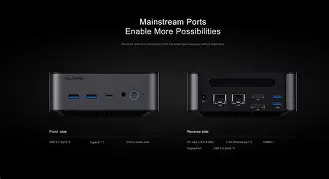
List current peripherals—monitors, external drives, audio equipment—and ensure the Gh8’s ports (quantity and type) support them. Consider at least one high-speed USB-C port for future expansion.
Looking for the best Laptops & Computers deals on Amazon?
View Offers →5. Consider Thermal Needs
Assess whether workloads are bursty or sustained. For long compute jobs, prioritize configurations known to have robust cooling or consider solutions with larger chassis options.
6. Networking Requirements
For file transfers, streaming, or server-like tasks, prioritize wired networking capabilities (Gigabit or higher). Built-in Wi-Fi is convenient but should not be the only networking consideration for office deployments.
7. Warranty and Support
Commercial deployments benefit from reliable warranty and support processes. Check warranty length, what it covers, and whether spares or replacement parts are readily available.
8. Operating System and Drivers
Confirm OS compatibility, particularly for Linux users. Ensure the vendor provides firmware updates and driver support for the chosen OS.
9. Power Consumption and Noise
If the device will run 24/7, check typical power draw and acoustic behavior. Lower power usage reduces operational costs and heat generation, but may come at the cost of peak performance.
10. Budget vs. Longevity
Balance initial cost with expected useful life. Spending slightly more for upgradeable memory and additional storage slots often improves long-term value compared with the cheapest fixed configurations.
Final Thoughts and Conclusion
The Alliwava Gh8 Mini PC is a pragmatic choice for users and small teams seeking a compact, capable desktop that can handle common professional workloads without occupying much desk real estate. Its strengths are its small footprint, configurable nature, and suitability for use cases ranging from remote office work to home media and light server duties.
Because mini PCs trade size for thermal headroom and expandability, the right Gh8 configuration depends on the buyer’s priorities. For those who require sustained high performance—heavy rendering, complex simulations, or high-end gaming—a larger desktop with a discrete GPU remains the superior option. For everyone else, the Gh8 can be a reliable, efficient, and unobtrusive daily driver when chosen with adequate RAM, NVMe storage, and attention to cooling and I/O needs.
Professionals evaluating the Gh8 should approach the purchase like any workstation investment: identify the primary tasks, choose a configuration that addresses the most demanding of those tasks, verify upgrade paths, and validate thermals and noise for expected operating conditions. With those considerations in place, the Gh8 can serve as a well-rounded, space-efficient cornerstone of a modern, organized workspace.